
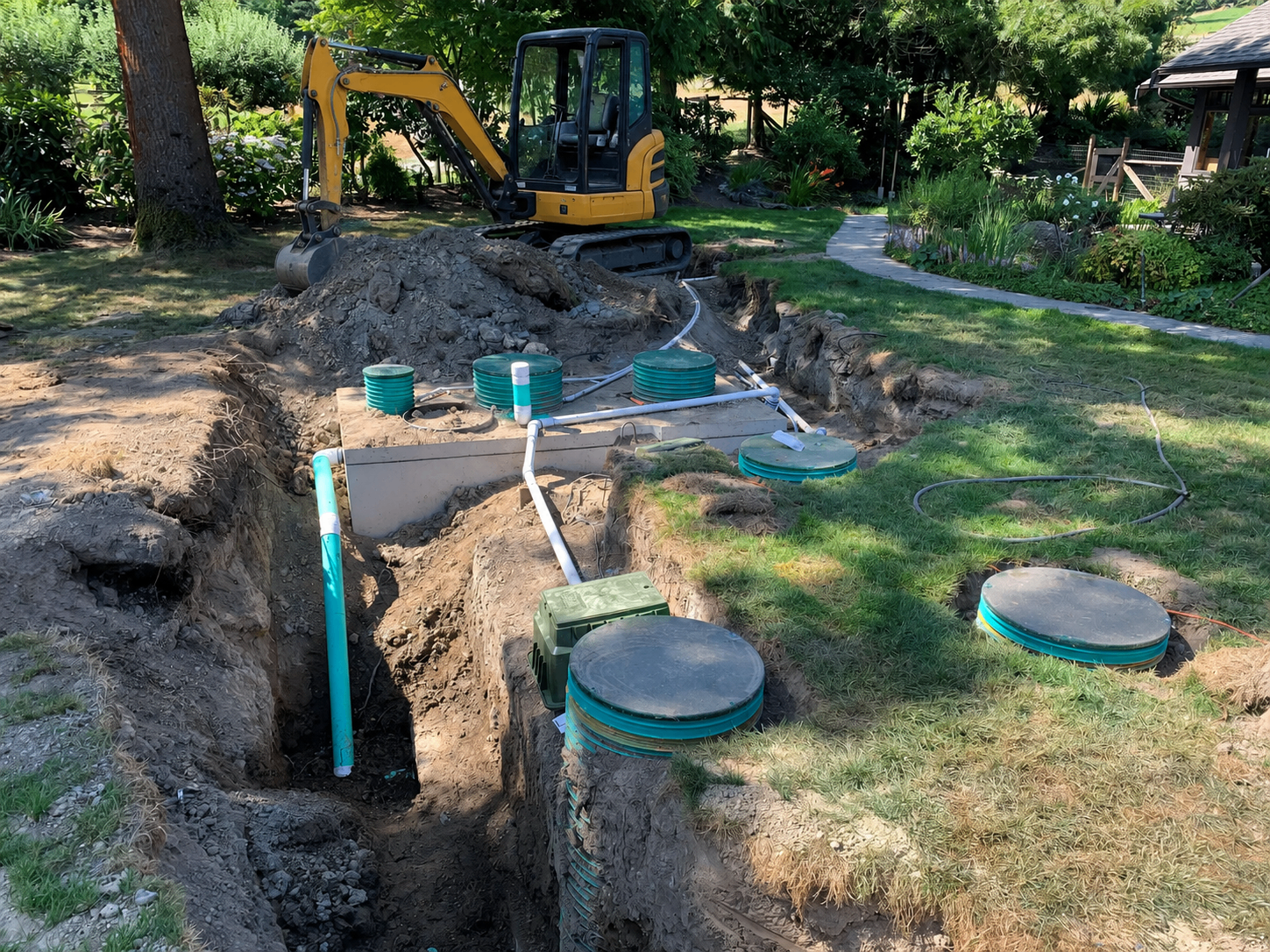
Every year we get called by folks who were told their lot "won't support septic." Some of those calls end in bad news. Most don't. Between mound systems, sand filters, aerobic treatment units, pressure distribution, and drip dispersal, there is almost always a path to a permitted, working system — it just costs more and takes longer than a conventional install.
When does the county require an engineered system?
- Perc rate is too slow (or too fast — yes, both fail)
- Less than about 3 feet of usable soil above bedrock or groundwater
- Slope steeper than county thresholds for gravity dispersal
- Setbacks from wells, waterways, structures, or property lines force a smaller footprint
- Parcel is too small for a conventional leach field
System types
Mound systems
Engineered above-ground sand mound for shallow soils, high groundwater, or slow perc. Very common in the Sierra.
Sand filters
Pre-treatment through a sand bed for effluent quality where native soil can't handle raw effluent.
Aerobic Treatment Units (ATUs)
Mechanical aerobic pre-treatment. Small footprint, cleaner effluent, mandatory ongoing service.
Pressure distribution
Pumped and dosed to distribute effluent evenly across the leach field — huge upgrade for marginal soils.
Drip dispersal
Low-pressure drip lines instead of gravel trenches. Works on tight or steep lots where conventional trenches won't fit.
Failed a perc test? Told your lot won't support septic?
Call us before you give up on the property. We've made a lot of "unbuildable" lots buildable.
How the process differs
- Longer design phase (weeks, sometimes months, with the engineer)
- More county back-and-forth on submittals and revisions
- Higher install cost — bigger equipment, imported material, mechanical components
- Ongoing maintenance contract for ATUs and most pressure systems